Castle Architecture
Although castle architecture developed over the centuries in line with weapons technology, the principles remained much the same. A good castle provided a secure base that could be easily defended. It needed defenses against frontal attack (thick, high walls and secure entry gates) and from undermining (rock foundations or a moat).
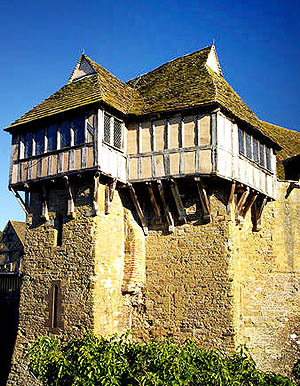
It furnished means of repelling attackers while minimising exposure of the defenders (arrow loops, crenellation, machicolations, murder holes). It also provided means of escape and of making sorties against attackers (postern gates and secret tunnels).
Further, it needed facilities to withstand a siege - a fresh water supply or large cistern and vast supplies of food.
A good castle had no dead-spaces - ie external areas that defenders could not fire on, but did provide multiple locations from which vulnerable points could be defended.
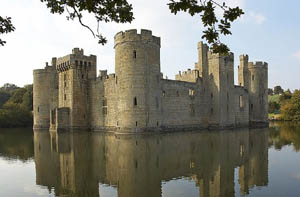
The best castles provided rings of defence so that defenders could hold out from a citadel even if the outer defences failed. Not least, a good castle was strategically placed, for example to monitor and control access to an important route through a valley.
Castles also needed facilities for a garison and living quarters.
- External
& Natural defenses:
- Cliffs and Mountain Tops
- Rivers & Lakes
- Moats and Ditches (douves)
- Ravelins
- Towers:
- The Keep (Donjon)
- Citadels
- Watch Towers
- Wall Towers (Towers and Curtain walls)
- Bartizans (Echaugettes)
- Walls:
- Curtain Walls
- Battlements & Crenellations
- Bossing
- Taluses
- Chemins de Rondes
- Hourdes
- Machicolations (Machicoulis)
- Brattices (Breteches)
- Meutrieres
- Murder holes
- Arrow Loops
- Canoniers
- Slighting a Castle
- Gateways:
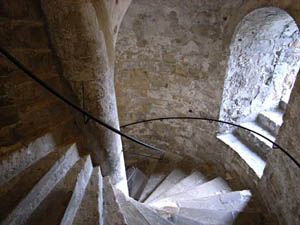
Dover Castle, Kent, England
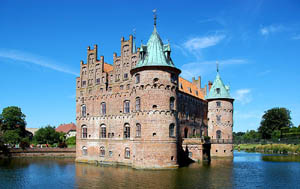
Muiderslot Castle, Netherlands 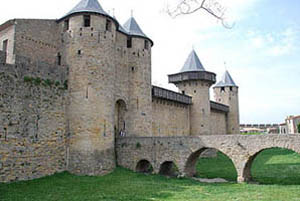
Carcassonne, France