Children's Castles
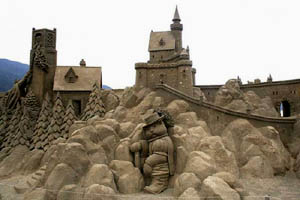
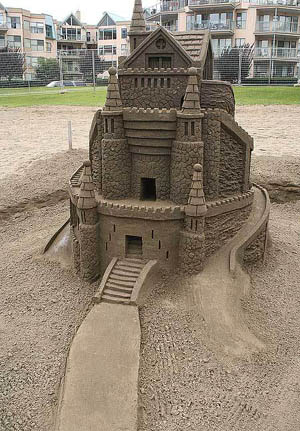
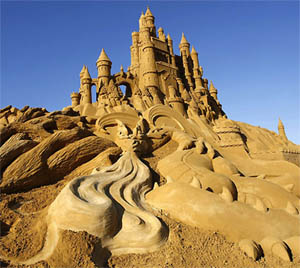
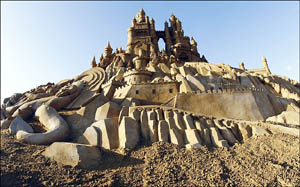
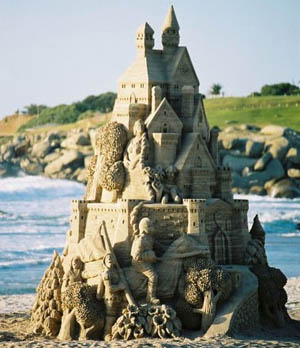
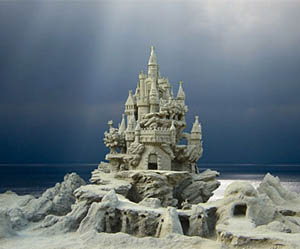
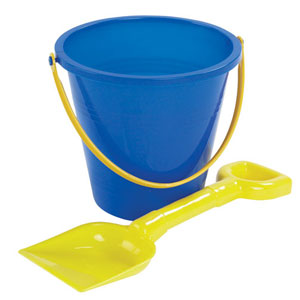
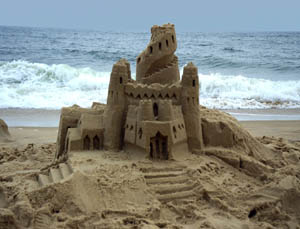
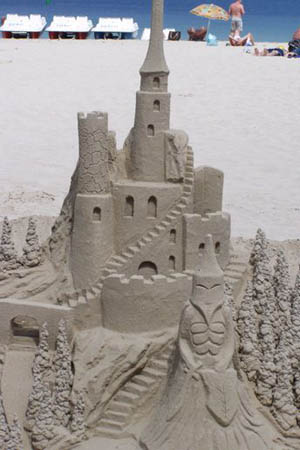
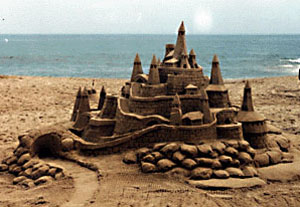
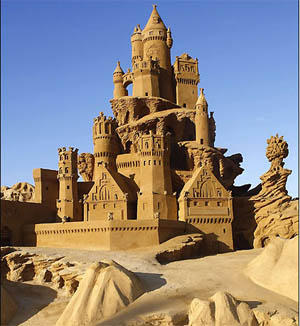
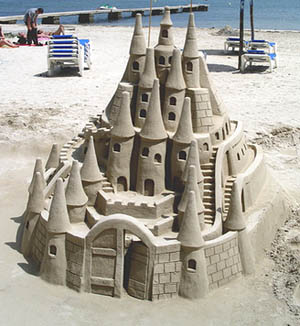
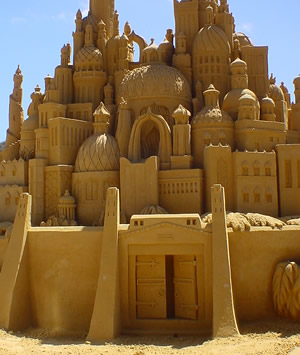
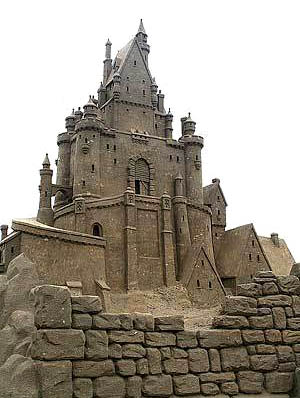
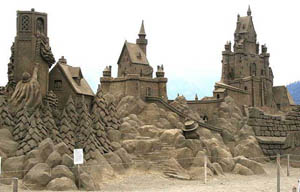
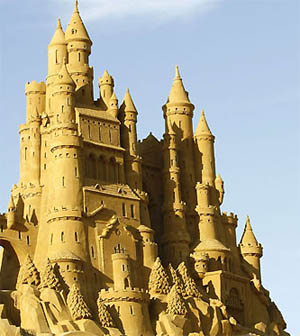
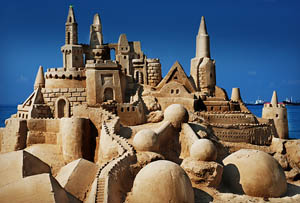
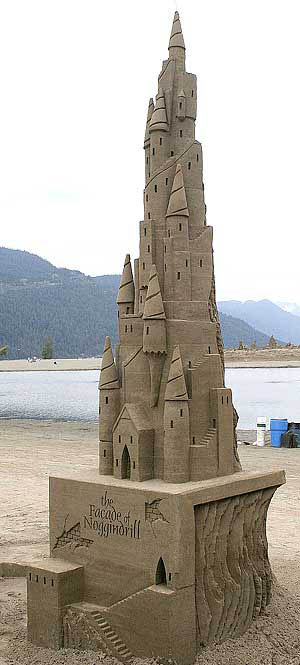
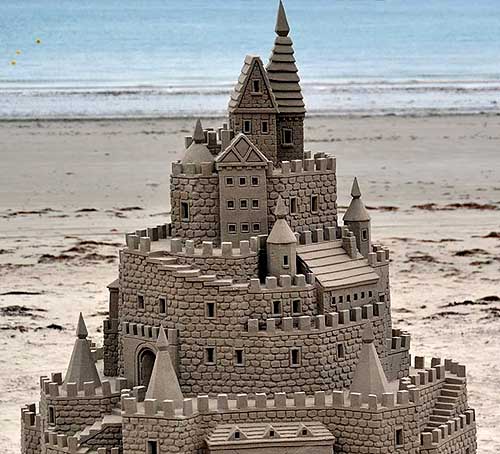
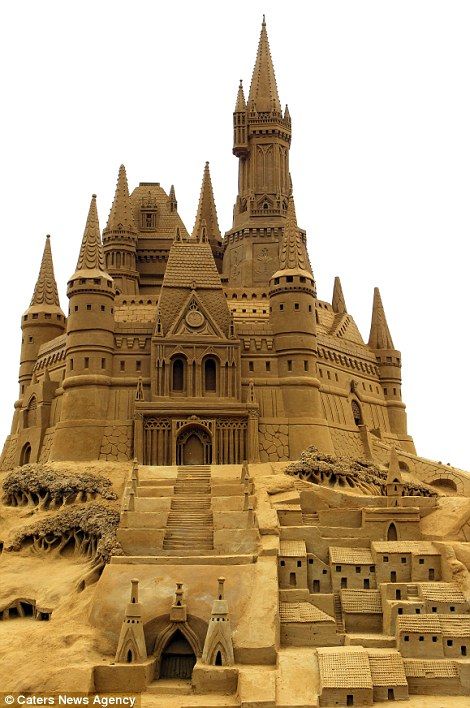
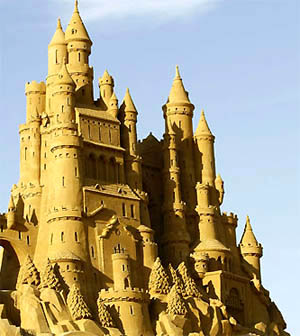
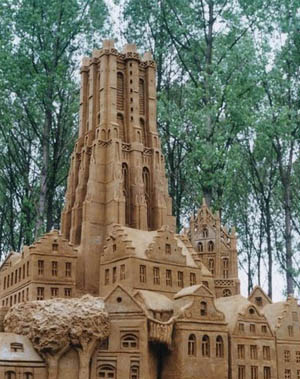
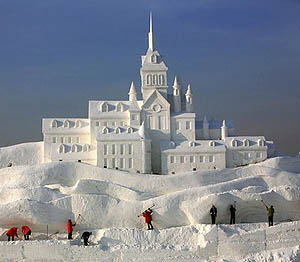
Sand Castles
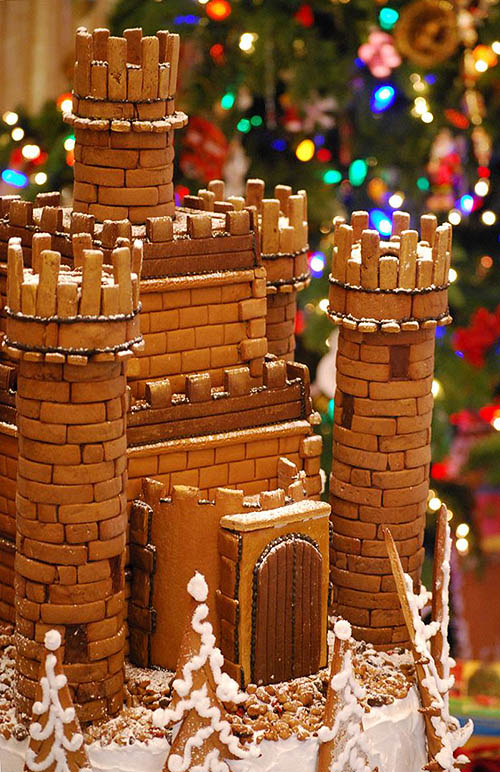
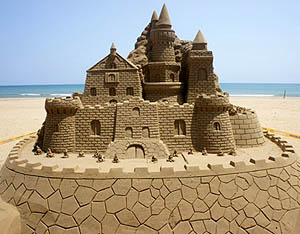
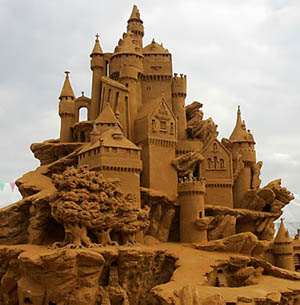
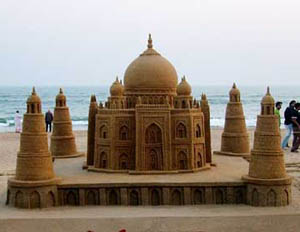
Some above average sand castles to emulate.

Quiz
Which of the following animals really wore chainmail or plate armour in the Middle Ages?
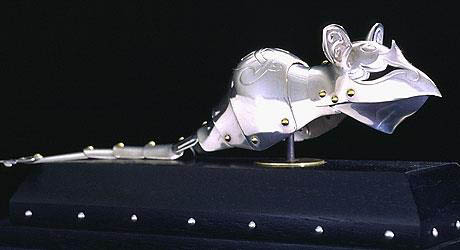
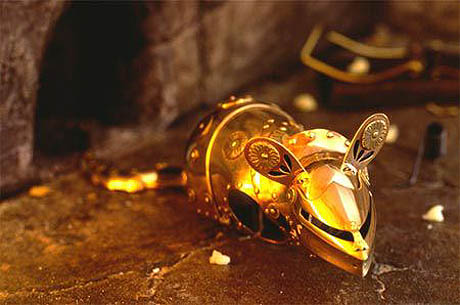
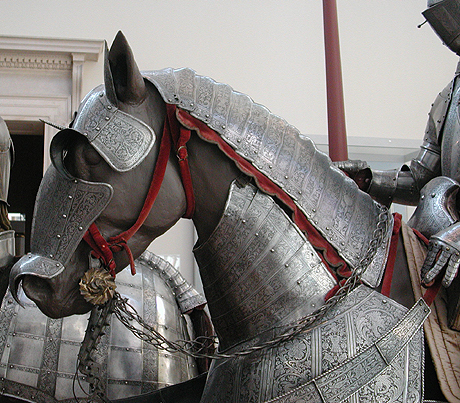
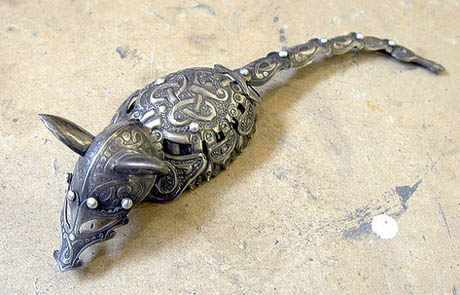
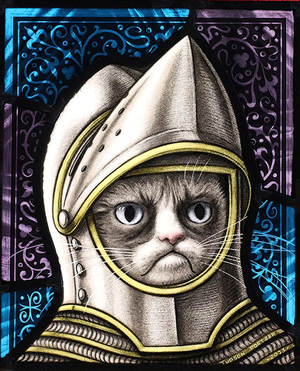
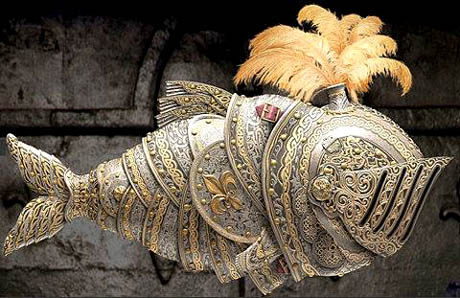
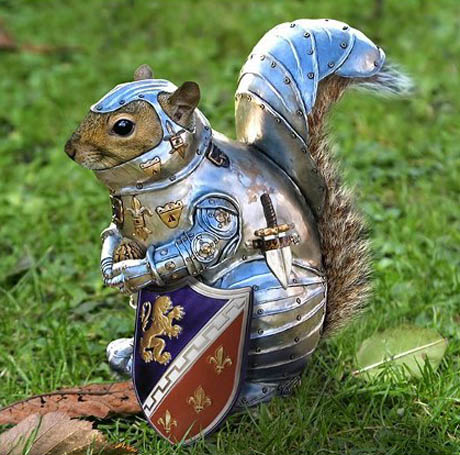
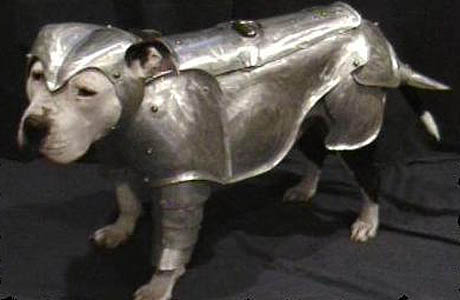
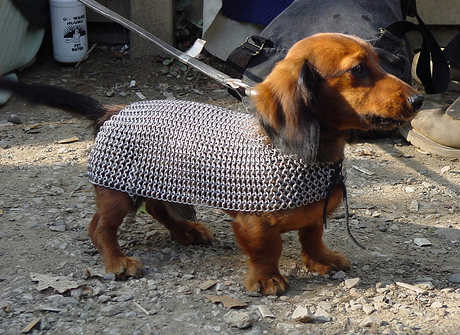
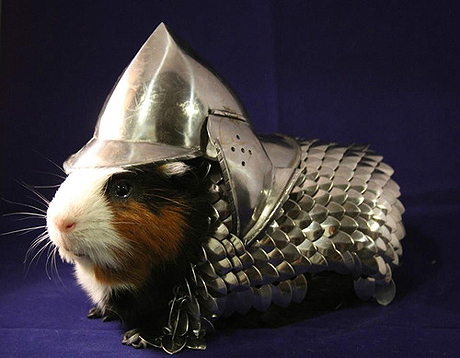
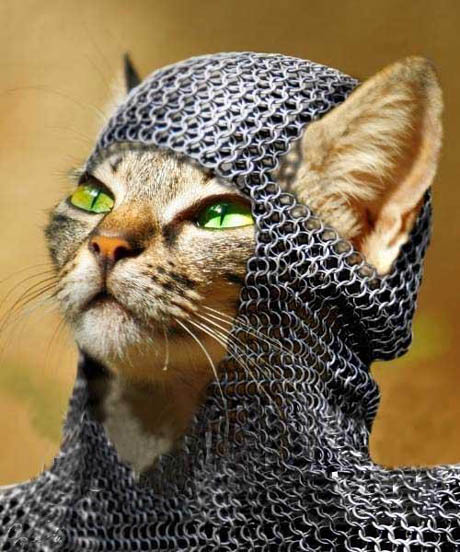
Quiz Answer

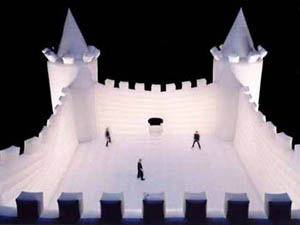
Bouncy castles are structures made of a flexible outer membrane or fabric that is filled with gas, such as air or helium. The gas gives shape and strength to the structure.
Bouncy castles have been marketed with such names as Bounce house, Moon Bounce, Astrojump, Moonwalk, Jolly jump and Spacewalk. The terms Bouncy Castle or Inflatable Castle are used in Ireland, the UK, New Zealand and parts of Australia, and Jumping Castles in Arizona, Australia, Canada and South Africa. The term moonwalk has become a generic term for enclosed inflatable trampolines in the US..
Bouncy Castles are rented for functions, school and church festivals and village fetes. Although they are aimed at children, adult castles can be hired in the UK. Because of liability concerns, they are rarely rented to adults in the US.
The growth in popularity of Bouncy Castles has led to an inflatable rental industry which includes inflatable slides, obstacle courses, and games. Inflatables are ideal for portable amusements because they are easy to transport and store.
The first inflatable structure was designed in 1959 by John Scurlock in Shreveport, Louisiana who was experimenting with inflatable covers for tennis courts when he noticed his employees enjoyed jumping on the covers. He was a mechanical engineer and became a pioneer of inflatable domes, inflatable tents, inflatable signs. His greatest achievement was the invention of the safety air cushion that is used by fire and rescue departments to catch people jumping from buildings or heights.
The surfaces are typically composed of thick, strong PVC or vinyl and nylon, and the castle is inflated using an electric or petrol-powered blower. The principle is one of constant leakage, meaning small punctures are not a problem - a medium-size "bouncy castle" requires a fan with a mechanical output of about two horsepower (consuming around 2 kW electrical power, allowing for the efficiency of the motor).
UK and Australian bouncy castles have specifications calling for fully inflated walls on three sides with an open front and foam "crash mats" to catch children who may jump or fall out of the structure.
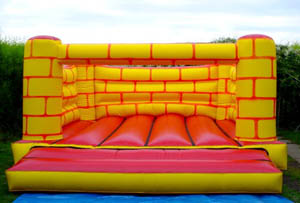
Cheaper inflatable structures are usually made of polyester rather than nylon PVC and do not use a blower, instead they are inflated with a pump similar to an airbed. They do not last as long and it is illegal in the UK and USA to hire these out.
Another type of home-use inflatable has evolved, with a blower pumping in air continuously. Pores in the seams and material allow air to escape as kids play, while the blower continues to inflate the unit. This category has emerged as a response to parents who wish to buy an inflatable for home use.
In 2005 the most severe standards in the construction of an inflatable amusement were adopted nationally in Australia, forming Federal Standard AS3533.4. This was a landmark safety standard bringing the toughest design/construction/operation standards to the inflatable industry of Australia. In 2006 the European Union (EU) followed and introduced similar Federal standards throughout Europe called EN14960:2006
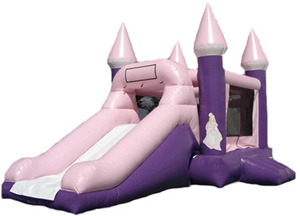
A theatrical group named "The Strolling Theatricals" has started performing Shakespear's tragedies on bouncy castles at the Edinburgh Festival
Artwork on most inflatable structures is hand-painted. It is cheaper for an artist to paint inflatables than to buy a printing machine or pay for a professional printer to print the artwork for a small quantity of inflatables.
For those wishing to have inflatables professionally printed, rather than painted, two technologies exist. One is to use screenprinting and the other uses digital printing machines which can print onto nylon. Usually, if the printing method is used then white PVC must be used and a pattern or artwork printed onto this.
Digital printing allows photographic quality pictures, something which is either difficult or impossible with hand-painting. Hand-painting is more durable as the paints tend to last longer in water, rain, and handling than printouts. It is also better for "cartoon" style images, which is the norm on children's inflatables.
The record for "Longest marathon on a bouncy castle (team)" is 25 hr 25 min, set by Will Scogin, Patrick Taylor, Miller Wright, David Wilson, Forrest Haynes and Jimbo Wilhite (all from USA) at Northridge High School, Tuscaloosa, Alabama, USA, on 10–11 October 2008
.
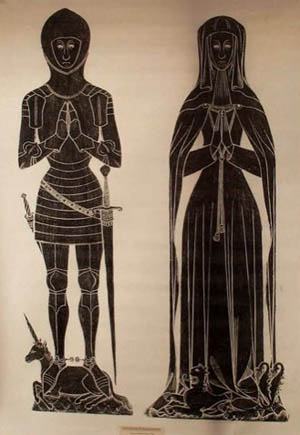
Engraved images of prominent people, who lived in the Middle Ages, were set into the floor or wall of their local parish church as a memorial or grave marker
Brass rubbing is the practice reproducing onto paper monumental brasses – commemorative brass plaques found in churches, usually originally on the floor, from between the 13th and 16th centuries. The concept of recording textures of things is more generally called making a rubbing.
Brass rubbings are created by laying a sheet of paper on top of a brass (actually called "latten" - an alloy of brass and nickel) and rubbing the paper with graphite, wax, or chalk, a process similar to rubbing a pencil over a piece of paper placed on top of a coin. Rubbings were most commonly made using the equivalent of what we would call "butcher's paper" (a 22-30 inch-wide roll of whitish paper) laid down over the brass and rubbed with "heelball", a waxy glob of black crayon once used to shine shoes.
Nowadays most brass-rubbers purchase special paper rolls of heavy-duty black velvety material, and the crayons are silver or gold (and other colours). After the early 1970s many church authorities decided that original brasses should not be rubbed since they were being worn away by the rubbing process, and the lack of care on the part of some individuals. Brass-rubbing centres had already appeared around the U.K. and now they became the prime source for rubbings. One now rubs a replica brass, not the original. Replicas are often not the same scale as the original.
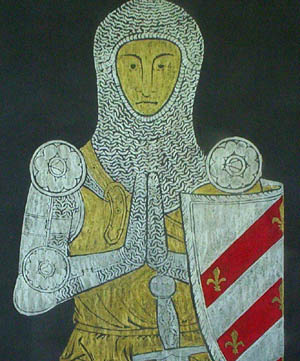
More info at www.mbs-brasses.co.uk
Family Names from Medieval Trades
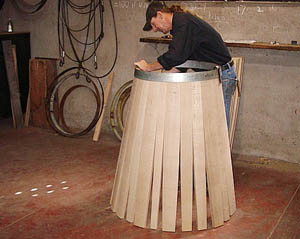
In the Middle Ages most trades were inherited from father to son. When surnames came into use it made sense to identify people by their trade. So it is that the names of many trades became surnames. Here are a few of them.
Archer - One who shoots arrows
Armourer - one who takes care of the armoury
Arrowsmith - one who makes arrows
Baker - one who bakes
Bower - bow maker
Bowman - one who makes bows or crossbows
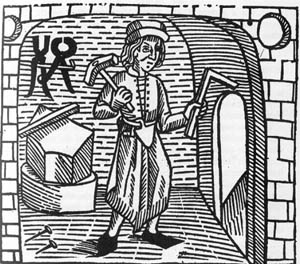
Brazer - one who care for the coal
Brewer - one who makes ale
Butler - one who attends to drink and bottles
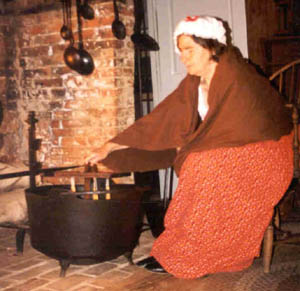
Carpenter - one who builds furniture
Chamberlain - one who takes care of bedrooms and the wealth stored there
Chandler - one who makes candles
Constable - chief groom, stable companion
Cook, Cooke - one who cooks
Cooper - one who makes barrels
Digger - one who digs
Dyer - one who dyes clothes
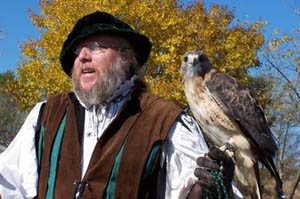
Falconer - One who hunts with hawks
Farmer - one who farms
Fishman - one who takes care of the fish
Fletcher - one who makes arrows
Forester - one who guards the forest
Furrier - one who cares for fur
Gardener - one who tends to the garden
Glover - one who makes gloves
Green - one who plants and cares for vegetables
Hall - one who tends to the halls
Harker - one who calls out messages
Herald - one who calls out news, keeper of the records
Houseman - one who tends to the house
Hunter - one who hunts
Leech - Physician
Marshall - one who takes care of the stables
Mason - one who constructs edifices
Piper - one who plays the pipe
Planter - one who plants
Plumber - one who tends to the (lead) water pipes
Reed, Reid - basket maker
Shoemaker - one who makes shoes
Shoeman - one who tends to shoes
Singer - one who sings
Smith - an iron worker or Blacksmith
(as opposed to a goldsmith, silversmith, coppersmith or whitesmith
(tin worker)
Spade - one who makes spades
Tanner - one who tans animal hides
Taylor, Tailor - one who sews or makes clothes
Weaver - one who weaves
Wright, playwright, shipwright, wheelwright - one who creates or makes things
.
Merlin's Castle. Designs for a paper castle plus Merlin, Fata Morgana, and others. Follow the simple instructions to create towers, walls, a gatehouse, and drawbridge and paper models of the combatants.
Kids On The Net. Kids On The Net.
Ghosts in the Castle!. From National Geographic. It features an interactive tour of a castle where you meet ghosts who tell you history and facts about castles. The site features a game called Rescue at the Castle.
Medieval Times Daily life and Medieval power structures.
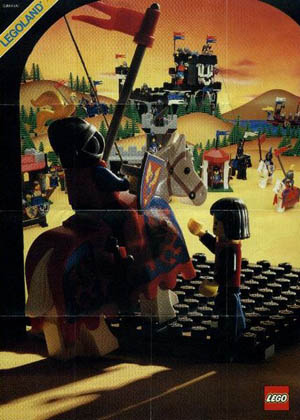
Lego Castle and Town. Tour a Lego Castle room-by-room - and learn about the Middle Ages.
www.games14.net/Play_Amazing_Knight.html