Manor Houses
A manor house is a country house, which historically formed the administrative centre of a manor, the lowest unit of territorial organization in the feudal system in Europe. A manor house was the dwelling house or "capital messuage" of a feudal lord of a manor.
The primary feature of the manor-house was its great hall, to which subsidiary apartments were added as the lessening of feudal warfare permitted more peaceful domestic life.
Legal trials or sessions of his "court baron" or manor court were generally held there, usually in the Great Hall of the Manor House. In France such courts were often held at the manoir, but outside the building in the courtyard.
A lord might posses a number of manors, each of which would typically have a manor house. So each manor house might have been occupied only on occasional visits. Sometimes a steward or seneschal was appointed by the lord to oversee and manage his different manorial properties. The day-to-day administration was delegated to a bailiff, or reeve.
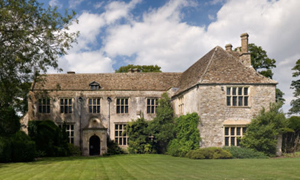
The term Manor House is sometimes applied to country houses which belonged to gentry families, even if they were never administrative centres of a manor. The term is used especially for minor late medieval fortified country houses often built more for show than for defence.
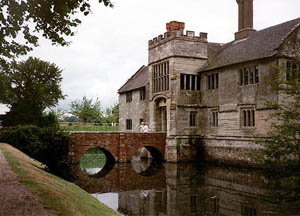
Although not typically built with strong fortifications as castles were, many manor-houses were partly fortified: they were enclosed within walls or ditches that often included the farm buildings as well. Arranged for defence against robbers and thieves, manor houses were sometimes surrounded by a moat with a drawbridge, and equipped with gatehouses and watchtowers; but was not generally provided with a keep, large towers or curtain walls and could not generaly withstand a long siege.
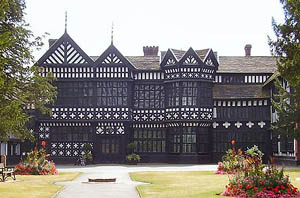
By the beginning of the 16th century, manor-houses as well as small castles began to acquire the character and amenities of the residences of country gentlemen. This late 16th century transformation produced many of the smaller Renaissance châteaux of France and the numerous country mansions of the Elizabethan and Jacobean styles in England.
In France, the terms château or manoir are often used synonymously to describe a French manor-house. More specifically a Maison-forte ("fortified-house") is a strongly fortified manor-house, which might include two sets of enclosing walls, drawbridges, and a ground-floor hall or salle basse that was used to receive peasants and commoners. The salle basse was also the location of the manor court, with the steward or seigneur's seating location often marked by the presence of a crédence de justice or wall-cupboard (shelves built into the stone walls to hold documents and books associated with administration of the demesne or droit de justice).

The salle haute or upper-hall was reserved for the seigneur. There he received his high-ranking guests. This upper hall was often accessible by an external spiral staircase. It was commonly "open" up to the roof trusses, as in similar English homes. This larger and more finely decorated hall was usually located above the ground-floor hall. The seigneur's and his family's private chambers were often located off of the upper first-floor hall. They invariably had their own fireplace (with finely decorated chimney-pieces) and frequently at least one latrine.
In addition to having both lower and upper-halls, many French manor-houses also had partly fortified gateways, watchtowers, and enclosing walls that were fitted with arrow or gun loops for added protection. Some larger 16th-century manors, such as the Château de Kerjean in Finistère, Brittany, were even outfitted with ditches and fore-works that included gun platforms for cannons. These defensive arrangements allowed maisons-fortes, and rural manors to be safe from an attack by an armed band - of which there were many during the Hundred Years War and again during the Wars of Religion. Manor houses were generally well enough protected to withstand attacks from casual marauders but it was difficult for them to resist a siege undertaken by a regular army equipped with siege engines.
Manorialism
Manorialism or Seigneurialism was the organizing principle of rural economy that originated in the villa system of the Late Roman Empire. According to the Church it was the system of government authorised by God - not merely permitted but enjoined. It was widely practiced in medieval western and parts of central Europe, and was slowly replaced by the advent of a money-based market economy and new forms of agrarian contract.
Manorialism was characterised by the vesting of legal and economic power in a lord, supported economically from his own direct landholding and from the obligatory contributions of a legally subject part of the peasant population under his jurisdiction. These obligations could be payable in several ways, in labour (corvée), in kind, or as time went on, in coin.

Abbots and Bishops were feudal lords - controlling around a third of Christian Europe. As Walter Horn noted"as a manorial entity the Carolingian monastery.. differed little from the fabric of a feudal estate, save that the corporate community of men for whose sustenance this organization was maintained consisted of monks who served God in chant and spent much of their time in reading and writing."
Manorialism died slowly and piecemeal, along with its most vivid feature in the landscape, the open field system. It outlasted feudalism: "primarily an economic organization, it could maintain a warrior, but it could equally well maintain a capitalist landlord. It could be self-sufficient, yield produce for the market, or it could yield a money rent." The last feudal dues in France were abolished at the French Revolution. In parts of eastern Germany, the Rittergut manors of Junkers remained until World War II.
The term is most often used with reference to medieval Western Europe. Antecedents of the system can be traced to the rural economy of the later Roman Empire. With a declining birthrate and population, labour was the key factor of production. Successive administrations tried to stabilize the imperial economy by freezing the social structure into place: sons were to succeed their fathers in their trade, councilors were forbidden to resign, and coloni, the cultivators of land, were not to move from the demesne they were attached to. They were on their way to becoming serfs. Several factors conspired to merge the status of former slaves and former free farmers into a dependent class of such coloni. Laws of the first Christian emperor Constantine I around 325 both reinforced the negative semi-servile status of the coloni and limited their rights to sue in the courts.
As Germanic kingdoms succeeded Roman authority in the West in the fifth century, Roman landlords were often simply replaced by Gothic or Germanic ones, with little change to the underlying situation.

In the generic plan of a medieval manor from Shepherd's Historical Atlas, the strips of individually-worked land in the open field system are immediately apparent. In this plan, the manor house is set slightly apart from the village, but equally often the village grew up around the forecourt of the manor, formerly walled, while the manor lands stretched away outside, as still may be seen at Petworth House.
As concerns for privacy increased in the 18th century, manor houses were often located a farther distance from the village. When a grand new house was required by the new owner of Harlaxton Manor, Lincolnshire, in the 1830s, the site of the existing manor house at the edge of its village was abandoned for a new one, isolated in its park, with the village out of view.
In an agrarian society, the conditions of land tenure underlie all social or economic factors. There were two legal systems of pre-manorial landholding. One, the most common, was the system of holding land "allodially" in full outright ownership. The other was a use of precaria or benefices, in which land was held conditionally (the root of the English word "precarious").
To these two systems, the Carolingian monarchs added a third, the aprisio, which linked manorialism with feudalism. The aprisio made its first appearance in Charlemagne's province of Septimania (modern Languedoc in the south of France), when Charlemagne had to settle the Visigothic refugees, who had fled with his retreating forces, after the failure of his Saragossa expedition of 778. He solved this problem by allotting "desert" tracts of uncultivated land belonging to the royal fisc under direct control of the emperor. These holdings aprisio entailed specific conditions. The earliest specific aprisio grant that has been identified was at Fontjoncouse, near Narbonne. In former Roman settlements, a system of villas, dating from Late Antiquity, was carried into the medieval period.
Manors each consisted of up to three classes of land:
- Demesne, the part directly controlled by the lord and used for the benefit of his household and dependents;
- Dependent (serf or villein) holdings carrying the obligation that the peasant household supply the lord with specified labour services or a part of its output (or cash in lieu), subject to the custom attached to the holding; and
- Free peasant land, without such obligation but otherwise subject to manorial jurisdiction and custom, and owing money rent fixed at the time of the lease.
Additional sources of income for the lord included charges for use of his mill, bakery or wine-press, or for the right to hunt or to let pigs feed in his woodland, as well as court revenues and single payments on each change of tenant. On the other side of the account, manorial administration involved significant expenses, perhaps a reason why smaller manors tended to rely less on villein tenure.
Dependent holdings were held nominally by arrangement of lord and tenant, but tenure became in practice almost universally hereditary, with a payment made to the lord on each succession of another member of the family. Villein land could not be abandoned, at least until demographic and economic circumstances made flight a viable proposition; nor could they be passed to a third party without the lord's permission, and the customary payment.
Though not free, villeins were by not in the same position as slaves: they enjoyed legal rights, subject to local custom, and had recourse to the law, subject to court charges which were an additional source of manorial income. Sub-letting of villein holdings was common, and labour on the demesne might be commuted into an additional money payment, as happened increasingly from the 13th century.

This description of a manor house at Chingford, Essex in England was recorded in a document for the Chapter of St Paul's Cathedral when it was granted to Robert Le Moyne in 1265:
He received also a sufficient and handsome hall well ceiled with oak. On the western side is a worthy bed, on the ground, a stone chimney, a wardrobe and a certain other small chamber; at the eastern end is a pantry and a buttery. Between the hall and the chapel is a sideroom. There is a decent chapel covered with tiles, a portable altar, and a small cross. In the hall are four tables on trestles. There are likewise a good kitchen covered with tiles, with a furnace and ovens, one large, the other small, for cakes, two tables, and alongside the kitchen a small house for baking. Also a new granary covered with oak shingles, and a building in which the dairy is contained, though it is divided. Likewise a chamber suited for clergymen and a necessary chamber. Also a hen-house. These are within the inner gate. Likewise outside of that gate are an old house for the servants, a good table, long and divided, and to the east of the principal building, beyond the smaller stable, a solar for the use of the servants. Also a building in which is contained a bed, also two barns, one for wheat and one for oats. These buildings are enclosed with a moat, a wall, and a hedge. Also beyond the middle gate is a good barn, and a stable of cows, and another for oxen, these old and ruinous. Also beyond the outer gate is a pigstye.
Like feudalism which, together with manorialism, formed the legal and organizational framework of feudal society, manorial structures were not uniform. In the later Middle Ages, areas of incomplete or non-existent manorialization persisted while the manorial economy underwent substantial development with changing economic conditions.
Not all manors contained all three kinds of land: typically, demesne accounted for roughly a third of the arable area, and villein holdings rather more; but some manors consisted solely of demesne, others solely of peasant holdings. The proportion of unfree and free tenures could likewise vary greatly, with more or less reliance on wage labour for agricultural work on the demesne.
The proportion of the cultivated area in demesne tended to be greater in smaller manors, while the share of villein land was greater in large manors, providing the lord of the latter with a larger supply of obligatory labour for demesne work. The proportion of free tenements was generally less variable, but tended to be somewhat greater on the smaller manors.
Manors varied similarly in their geographical arrangement: most did not coincide with a single village, but rather consisted of parts of two or more villages, most of the latter containing also parts of at least one other manor. This situation sometimes led to replacement by cash payments or their equivalents in kind of the demesne labour obligations of those peasants living furthest from the lord's estate.
As with peasant plots, the demesne was not a single territorial unit, but consisted rather of a central house with neighbouring land and estate buildings, plus strips dispersed through the manor alongside free and villein ones: in addition, the lord might lease free tenements belonging to neighbouring manors, as well as holding other manors some distance away to provide a greater range of produce.
Nor were manors held necessarily by lay lords rendering military service (or again, cash in lieu) to their superior: a substantial share (estimated by value at 17% in England in 1086) belonged directly to the king, and a greater proportion (rather more than a quarter) were held by bishoprics and monasteries. Ecclesiastical manors tended to be larger, with a significantly greater villein area than neighbouring lay manors.

By extension, the word manor is sometimes used in England to mean any home area or territory in which authority is held, often in a police or criminal context.
Lord of the Manor
The title of Lord of the Manor arose in the English mediaeval system of Manorialism after the Norman Conquest. The title Lord of the Manor is a titular feudal dignity which is still recognised today as semi-extinct form of landed property. Their Lord of the Manor of (say) Moorstones is still entitled to call himself Joe Soap, Lord of the Manor of Moorstones, but the title does not does not entitle him to a coat of arms. According to John Martin Robinson, Maltravers Herald Extraordinary , ”Lordship of this or that manor is no more a title than Landlord of The Dog and Duck".
In England in the Middle Ages land was held of the English monarch or ruler by a powerful local supporter, who gave protection in return. The people who had sworn homage to the lord were known as vassals. Vassals were nobles who served loyalty for the king, in return for being given the use of land. After the Norman conquest of England, however, all the land of England was owned by the monarch who then granted the use of it by means of a transaction known as enfeoffment, to earls, barons, and others, in return for military service. The person who held feudal land directly from the king was known as a 'tenant-in-chief'.
Military service was based upon units of ten knights. An important tenant-in-chief might be expected to provide all ten knights, and lesser tenants-in-chief, half of one. Some tenants-in-chief 'sub-infeuded', that is, granted, some of their land to a sub-tenant. Further sub-infeudation could occur down to the level of a lord of a single manor, which in itself might represent only a fraction of a knight's fee. A mesne lord was the level of lord in the middle holding several manors, between the lords of a manor and the superior lord. The sub-tenant might have to provide knight service, or finance just a portion of it, or pay something purely nominal. Any further sub-infeudation was prohibited by the Statute of Quia Emptores in 1291. Knight service was abolished by the Tenures Abolition Act 1660.

A typical manor contained a village with a church and agricultural land. The lord usually had a large block of this land. Some of the inhabitants were serfs and were bound to the land, others were freeholders, known as 'franklins', who were free from feudal service. Periodically all the tenants met at a 'manorial court', with the lord of the manor, or his steward, as chairman. These courts, known as Courts Baron, dealt with the tenants' rights and duties, changes of occupancy, and disputes between tenants. Some manorial courts also had the status of a court leet, and so they elected constables and other officials and were effectively Magistrates Courts for minor offences.
The tenure of freeholders was protected by the royal courts. After the Black Death, labour was in demand and so it became difficult for the lords of the manors to impose duties on serfs. However their customary tenure continued and in the 16th century the royal courts also began to protect these customary tenants, who became known as copyholders. The name arises because the tenant was given a copy of the court's record of the fact as a title deed. During the 19th century manor courts were phased out. In 1925 copyhold tenure formally ended with the enactment of Law of Property Acts, 1922 and 1924.
Although copyhold was abolished, the title of Lord of the Manor, and some of the property rights attached to it, was not. During the latter part of the 20th century, many of these titles were sold to wealthy individuals seeking a distinction.
Since 1926 the Historical Manuscripts Commission has maintained two Manorial Documents Registers. One register is arranged under parishes, the other is arranged under manors and shows the last-known whereabouts of the manorial records. Those that have survived are often at County Record Offices but some are still in the hands of the owners.

In English and Irish Law, the lordship of the manor is treated as being distinct from the actual lands of the manor. The title of lord of the manor is regarded as an 'incorporeal heriditament' (an inheritable property that has no explicit tie to the physical manor) i.e. it can be held "in gross", and it can thus be bought and sold, just as fishing rights may. Landowners may, therefore, sell their feudal title while retaining their land. The title separate from the land remains a feudal 'title of dignity'.
A genuine lordship of the manor is backed by original papers and proof of continuous ownership. Some rights and privileges, or even obligations may go alongside a particular lordship (a famous example is the lordship of the Manor of Worksop). Lordships with a church affiliation often have a clause that the owner of the title must contribute to the cost of repairs of the church building. If the lordship owns a road, it is possible - in a very limited number of cases - to charge others for use of this road on the basis that they are crossing the lordship's land.
More on Types of Castle and History of Castles
Click on any of the following links to learn more about specific types of castle







- Ancient Castles: The basics of attack and defence
- Castles Around the world
- Motte & Bailey Castles European castles around 1000 AD
- Norman Castles The first significant European castles with stone keeps.
- Crusader Castles & Concentric Castles Evolution of design due to lessons learned in the Levant.
- Cathar Castles Distinctive hilltop castles of the Languedoc
- Japanese Castles
- Town Fortifications - Defensible villages and towns
- Fortified
Houses Defensible Manors and other defensible houses.
- Tower Houses Defensible Towers.
- Peel Towers Defensible Towers in the Scottish Borders.
- Bastle Houses Defensible Scottish Houses.
- Irish Fortified Houses Defensible Irish houses.
- Defensible Manor Houses Defensible English houses.
- Star Forts Castle design affected by the rising power of fire arms and the innovations of de Vauban
- Stately Homes - New Great Country Houses
- Palaces - Around the world
- Romantic & Decorative Castles. Looking like romanticised castles and built for comfort, notably:
- Manors
- Town Houses