Types of Castle and The History of Castles
Cathar Castles
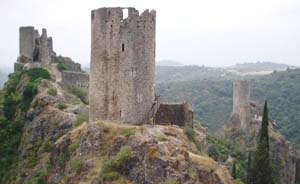
Cathar castles (in French châteaux cathares) are castles in the Midi – the South of modern France – dating from the Middle Ages and associated with the religion of the Cathars. Most of them are in the Languedoc.
The Cathars were a religious group who disagreed with the Roman Catholic Church on many points. They refused to eat meat, they were pacifists, they refused to discriminate against Jews or women, they abhorred wealth and luxury, they practiced poverty, they accepted suicide, contraception and euthanasia,. they refused to swear oaths or to kill. They refused to pay tithes to another Church. For these and several other reasons they were condemned as heretics.
The Catholic Church organised a crusade against them, the infamous Albigensian Crusade. The Cathars and their sympathisers took refuge in local strongholds, especially the defensible castles and castra located on mountain tops. These are the sites of so-called Cathar Castles.
For two generations Catholic armies and later Inquisitors undertook the extirpation of the Cathars, frequently besieging them in their spectacular mountaintop eiries.
All of the main "Cathar Castles" advertised to tourists as romantic vestiges of the Cathar period are no such thing. They are generally castles built by the French after the Cathar Crusade, and used to defend their new border with Aragon. These castles were slighted, or left to decay, after the Treaty of the Pyrenees in the seventeenth century. They are often built on the site of earlier castles occupied by vassals and allies of the Counts of Toulouse during the Cathar period.
Broadly there are five categories of "Cathar Castle".
- Genuine Cathar Castles, advertised as Cathar Castles: There are very few of these, although you may find a few vestiges near to existing structures (eg castles at Peyrepertuse, and Puivert). Carcassonne probably has the best claim to be a Cathar Castle, followed by three quarters of Lastours (Cabaret).
- Later French Castles built on the site of Cathar strongholds, advertised as Cathar Castles: Coustaussa, Puilaurens, Montségur, Queribus, Termes, Aguilar, .
- French Castles with no Cathar connections, but sometimes advertised as Cathar Castles: such as Arques.
- Cathar Castles not generally advertised as Cathar Castles although they are: Pieusse, Le Bézu, Usson.
- Sites of Cathar Castles: Béziers, Toulouse, Bram, Marmande, Lavaur, Minerve, Beaucaire, Castelnaudry.
There are also castles of interest because of their links with events during the Cathar period, for example: Avignonet, where Cathar sympathisers helped some particularly unpleasant Inquisitors into their next incarnations. Villerouge Termenès, a castle belonging the the Archbishop of Narbonne, where the last known Cathar Parfait in the Languedoc was burned alive, and Montaillou, the home of Beatrice de Plannissols, a major character in the events following the arrest of a whole village by the Inquisition on suspicion of Cathar sympathies.
In 1659, Louis XIV and the Philip IV of Spain signed the Treaty of the Pyrenees, sealed with the marriage of the Infanta Marie Therese to the French King. The treaty modified the frontiers, giving Roussillon to France and moving the frontier south to the crest of the Pyrenees, the present Franco-Spanish border. The fortresses thus lost their importance. Some maintained a garrison for a while, a few until the French Revolution, but they slowly fell into decay, often becoming shepherds' shelters or bandits hideouts.
You learn more about the Cathars here and Cathar Castles here



More on Types of Castle and History of Castles
Click on any of the following links to learn more about specific types of castle
- Ancient Castles: The basics of attack and defence
- Castles Around the world
- Motte & Bailey Castles European castles around 1000 AD
- Norman Castles The first significant European castles with stone keeps.
- Crusader Castles & Concentric Castles Evolution of design due to lessons learned in the Levant.
- Cathar Castles Distinctive hilltop castles of the Languedoc
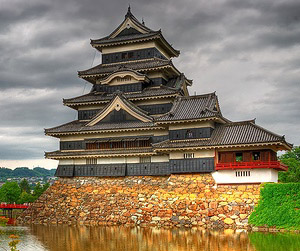
- Japanese Castles
- Town Fortifications - Defensible villages and towns
- Fortified
Houses Defensible Manors and other defensible houses.
- Tower Houses Defensible Towers.
- Peel Towers Defensible Towers in the Scottish Borders.
- Bastle Houses Defensible Scottish Houses.
- Irish Fortified Houses Defensible Irish houses.
- Defensible Manor Houses Defensible English houses.
- Star Forts Castle design affected by the rising power of fire arms and the innovations of de Vauban
- Stately Homes - New Great Country Houses
- Palaces - Around the world
- Romantic & Decorative Castles. Looking like romanticised castles and built for comfort, notably:
- Manors
- Town Houses